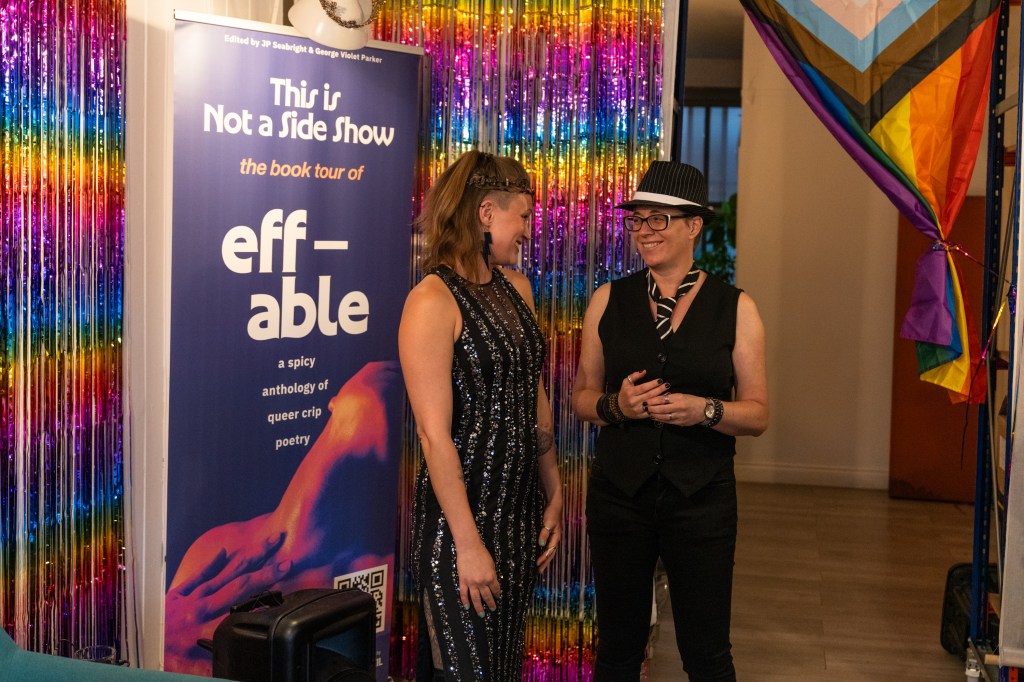
“A celebration of those bodies that have been put in boxes and said ‘No, these bodies are capable of so much more. These bodies are capable of genuine pleasure, giving and receiving genuine pleasure and that is something worth exploring.’”
We gathered feedback from audience members, readers, performers, poets, mentors, and production crew to see what impact the eff-able project had on people.
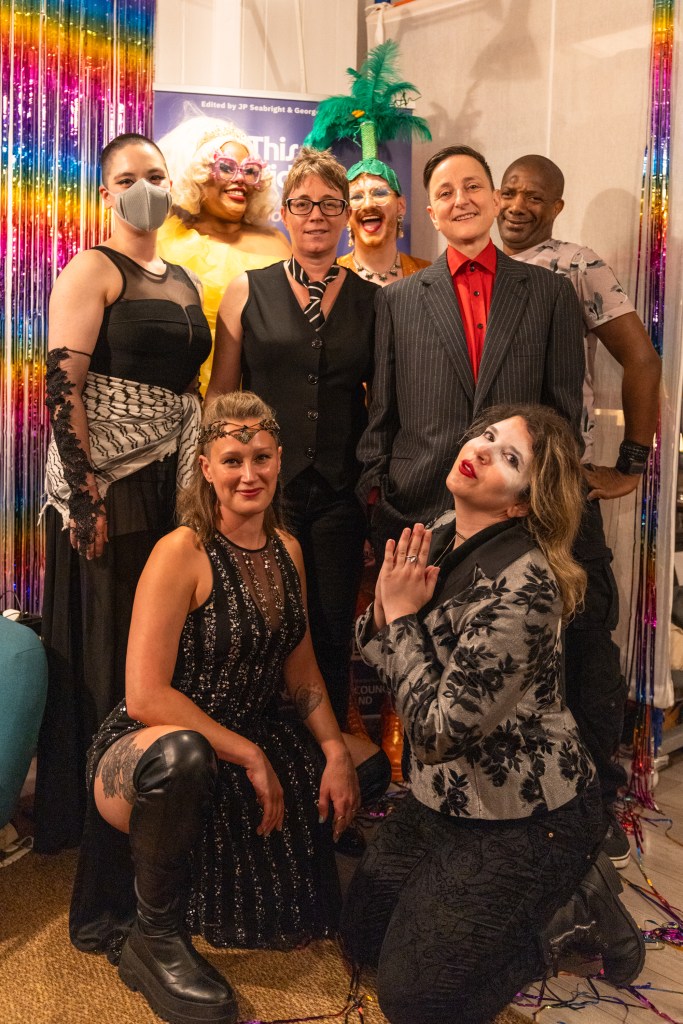
The intersection of queerness and disability is such an under-represented identity that isn’t talked about enough. And obviously, you know, disabled people have sex, queer people have sex and it’s a beautiful way to bring that to the forefront and show people that it’s not something to be ashamed of, it’s something to be celebrated. It’s something to be explored and talked about. I think this whole project platforms a voice that needs to be heard. It gives space for conversations around that. – Carrot
This event tonight was so beautiful and I was in one of those spaces where […] it’s really beautiful for me because I’m early in my coming out journey, and it’s a real fucking journey ain’t it? It’s just so beautiful to be here and feel safe and connected, and a feeling of community that I’ve not felt before, which I’m quite overwhelmed with, as you can see, and it’s just so special and, just so beautiful to see. So many wonderful people coming together and just celebrating each other and themselves, and just everybody looks so fucking amazing. Everyone’s outfits are just gorgeous. So I just feel very heartwarmed. – Anna
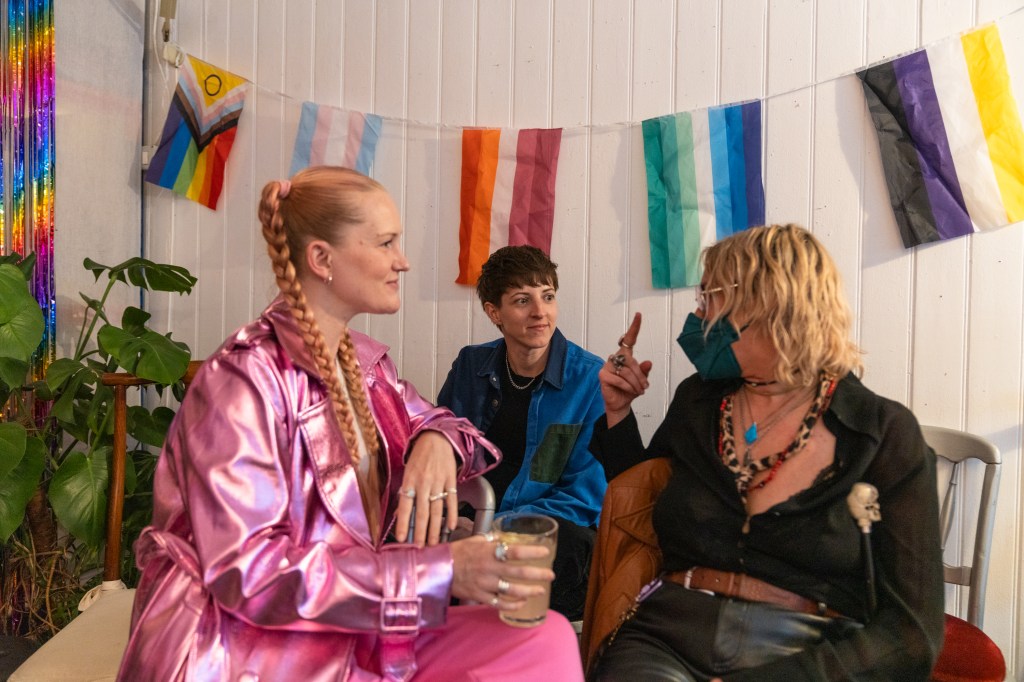
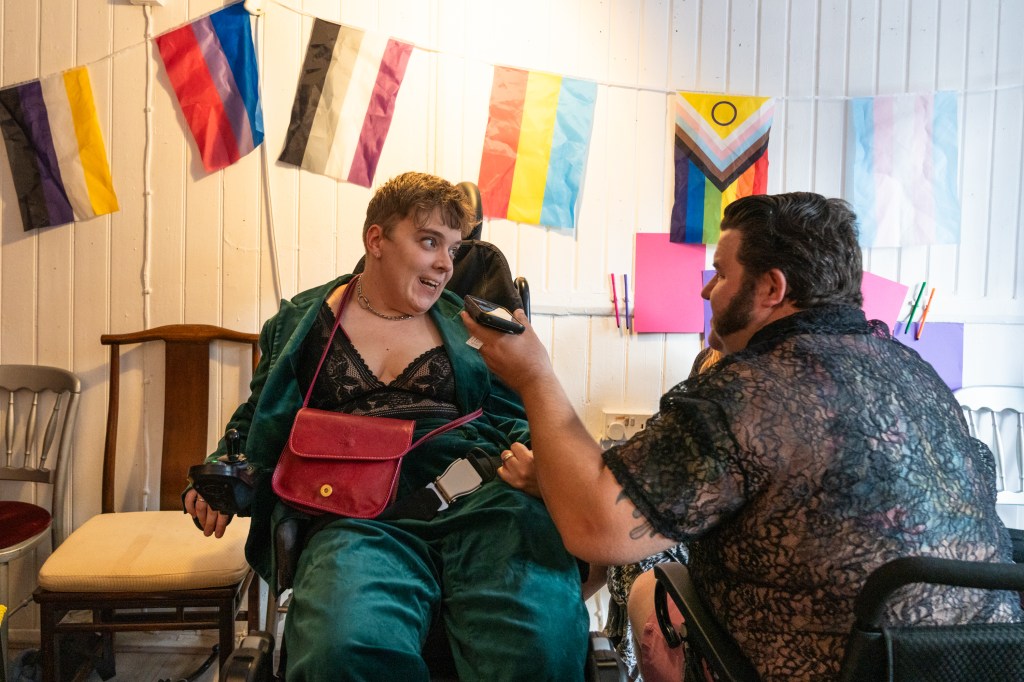
It’s wonderful to see something about disability being sexy because we are really sexy. Other people don’t get to see that. But to see it in writing tells people how sexy we are. The more the merrier. – Lucy Webster
From a disabled standpoint, I feel like disabled people recognise ourselves in a way that is non-conformist and subversive and that can relate to all sorts of things that are really glorious and expansive and something beyond the usual realms of, I don’t know, the cis normative like heterosexual sexuality. Reading this sort of anthology is just something that is really beautiful and really great and also really fucking hot. So yeah, read it. Read it and get wet! – Dot
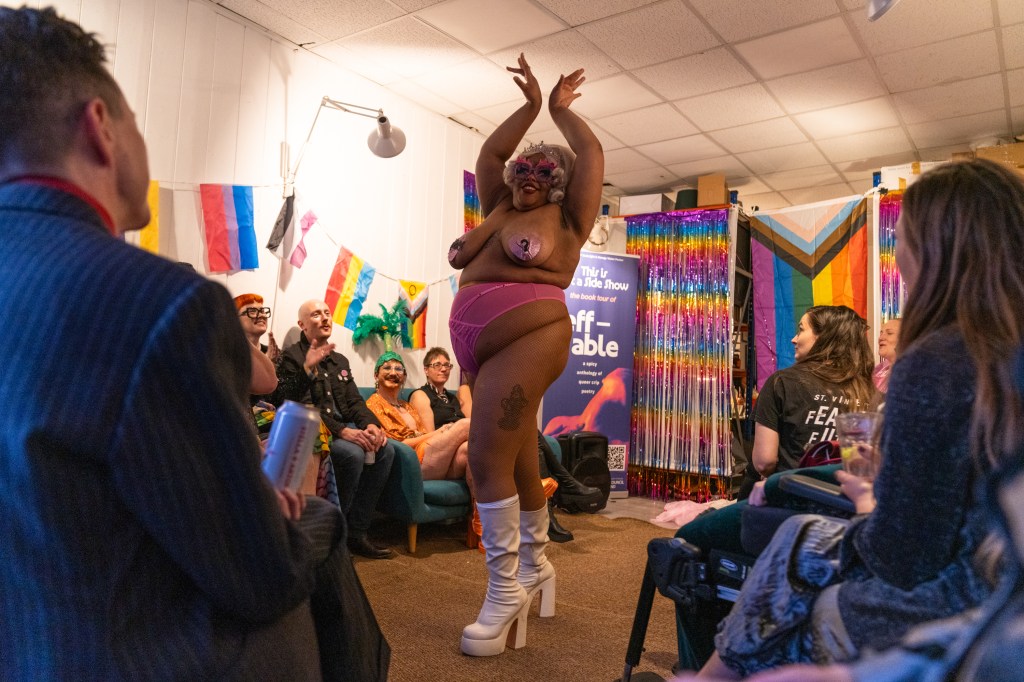
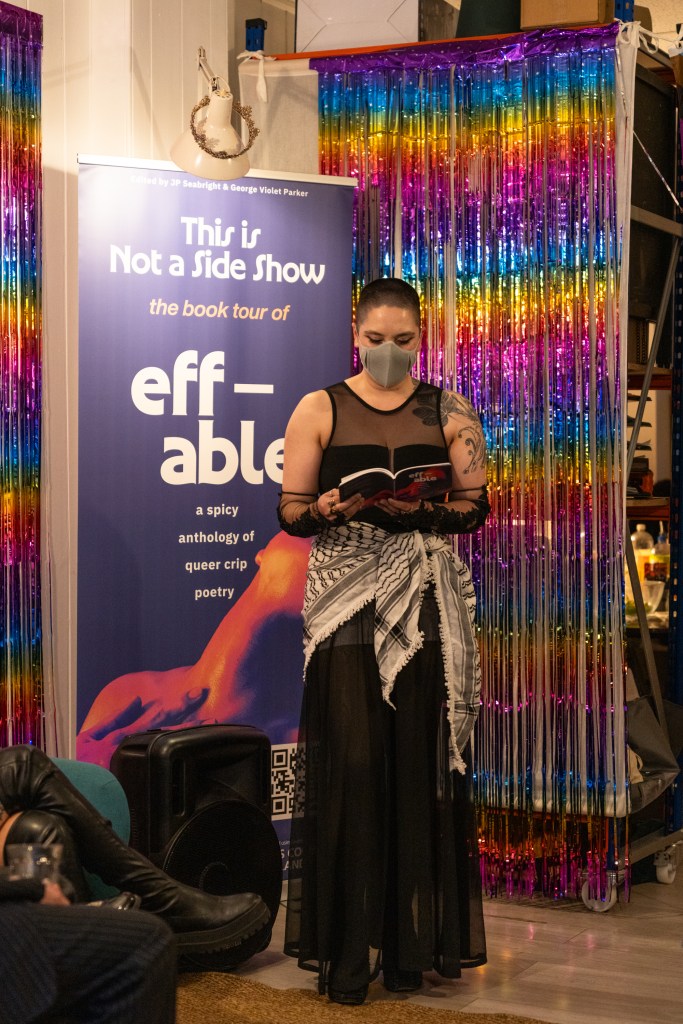
It’s meant being finally, in a community with more people that are like, non-binary trans queer as well as like, disabled chronically ill, and neurodivergent. Rarely do we ever have kind of community spaces that are accessible and open, and embracing of all of our identities. I made so many friends. It’s been so wonderful to have rooms almost of ourselves for ourselves in our entirety, and that’s been an absolute privilege. And I’ve loved every second of it. It’s been so lovely to have people here now because oftentimes like we’re looking at historical records. We’re looking at archives. Oh, we’re looking at people that aren’t with us anymore, where it’s like, we’re all here. We’re all fighting this and we’re all collected together in the anthology. So as a reader, it’s been incredibly hopeful as a project. – Cat Chong
eff-able for me was incredibly important because with a disabled body you’re not allowed to express certain things, people want to put you in a box and say, well, this is all you’re capable of, and maybe you’re capable of anything more. They turn you into inspiration porn. What I really love about Effable is it was a celebration of those bodies that have been put in boxes and said no. These bodies were capable of so much more. These bodies are capable of genuine pleasure, giving and receiving genuine pleasure and that is something worth exploring. – Rick
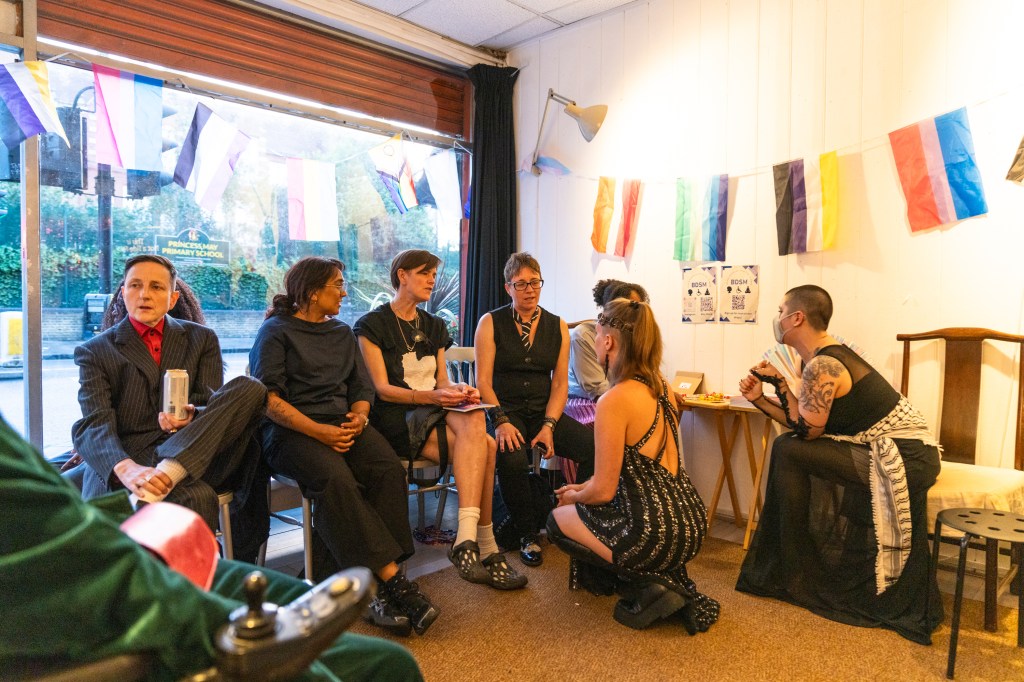
I think I as a queer disabled person, I am often required to separate parts of my identity in order to engage with creative work or social settings. Particularly when like funding structures and spaces and community are oriented around just one element. And you’re always at risk of kind of being seen as too much or losing an opportunity because you dared to complicate things by being queer, as well as disabled or disabled as well as queer. I think creative spaces where people can reflect their experiences with true authenticity, and with true full humanity are vital and it is frankly a crime that queer disabled, people have been deprived of this. – Ellen Jones
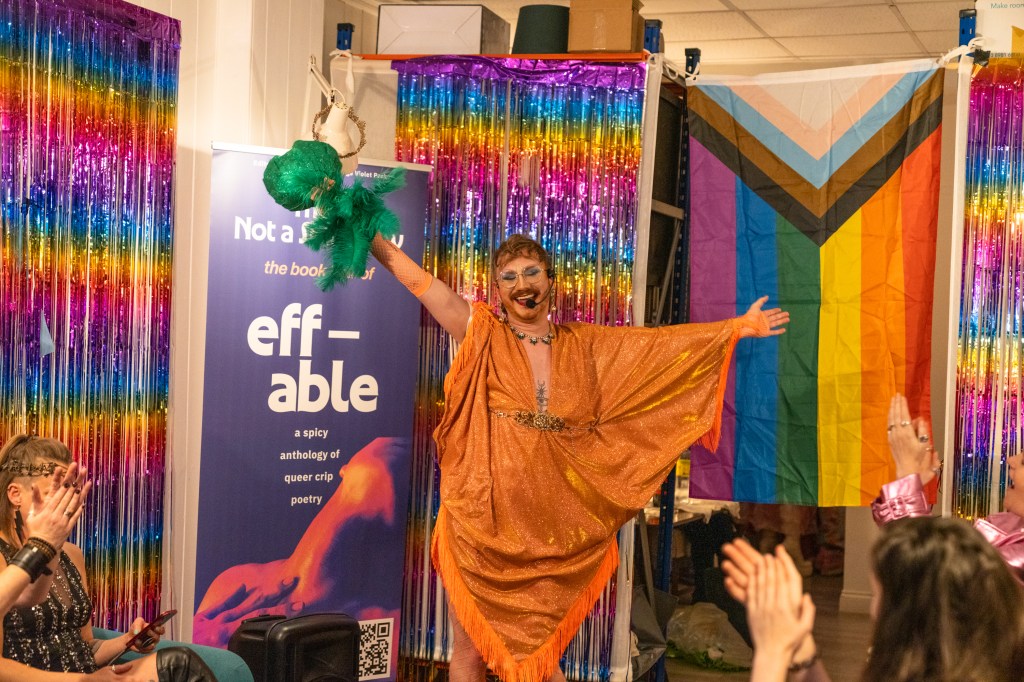
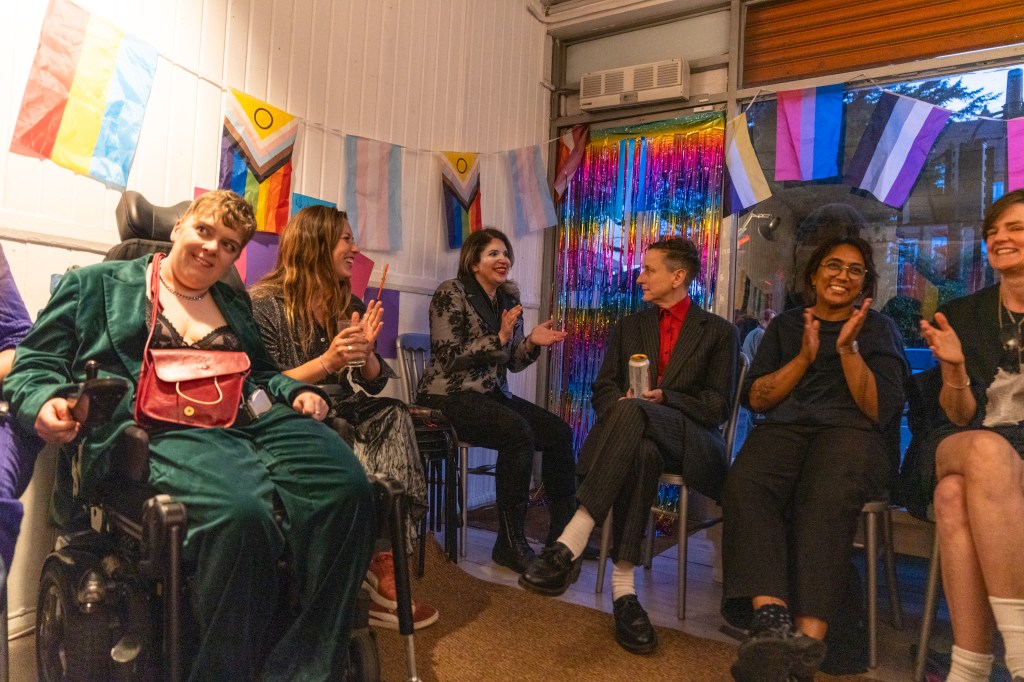
I think it’s really important to make that space because it’s important in part to build community between people across the Queer Disabled Spectrum. eff-able has helped to create those spaces where everyone can be themselves unapologetically and communicate and talk with each other and have that dialogue and create that community space.
I think people would need to take responsibility for learning about things and vice versa. I think lots of disabled people have been deprived of the opportunity to like even know that they’re able to be sexual and that they’re able to engage with that and be in their bodies and have these conversations. I think what I really appreciate about this collection and I appreciate about the events is it holds space for the full complexity. It’s not about things being always fantastic. It’s not about things being always terrible. It’s actually the full nuanced spectrum of things. – Ellen Jones
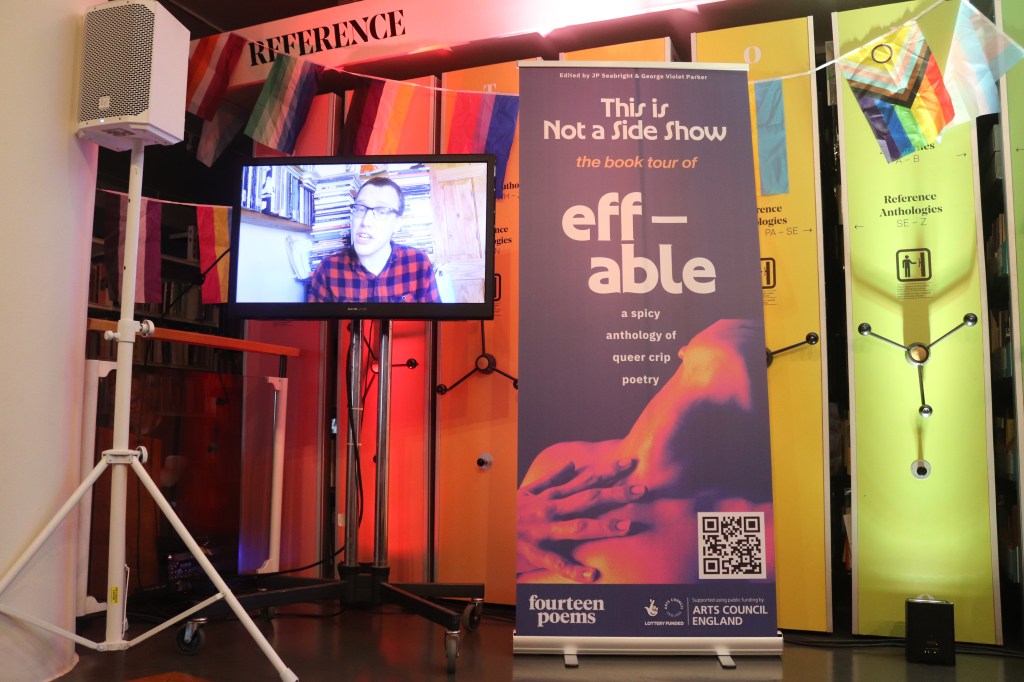
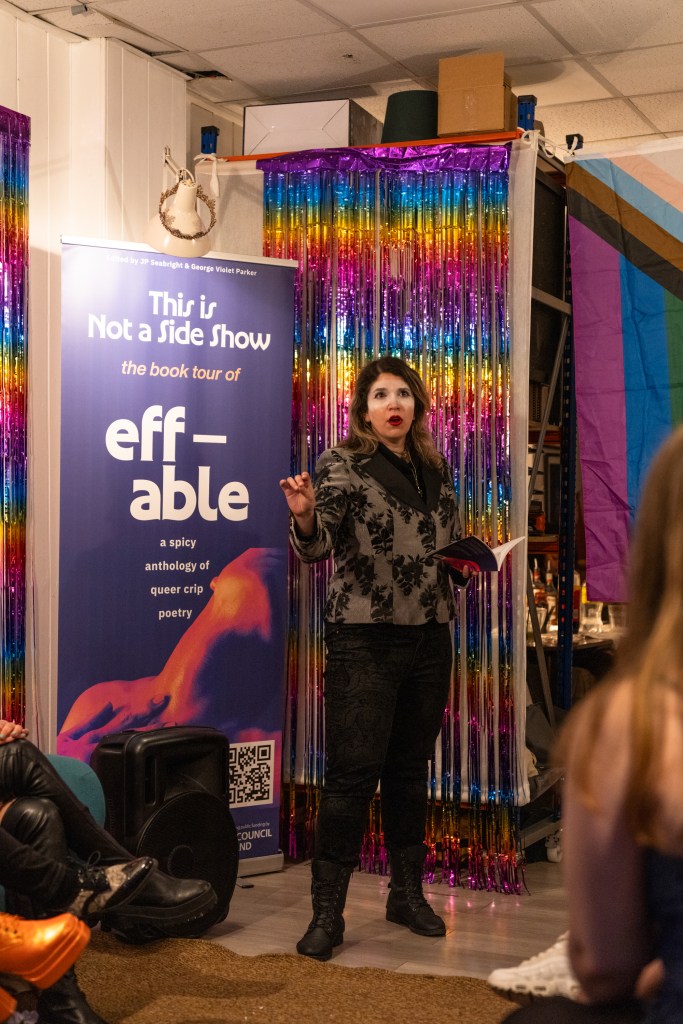
I was very comforted to see that this is something that we’re speaking about and not pretending like it doesn’t happen. Like it was, um, an open forum to discuss it. Like, oh my gosh, you get it and we’re celebrating it. And I’m so pleased that I can connect with you in this way. I was immediately like they get it, I get it. I’m so excited by this and I want to work with you.
We’re these sexy people that are deserving of pleasure, love and touch in a way that really centres us. So, yeah, I would pass it on to anyone else that might be feeling like their disabilities are a limitation to their sex life and say actually no we’re fucking. So I love it. – Lula
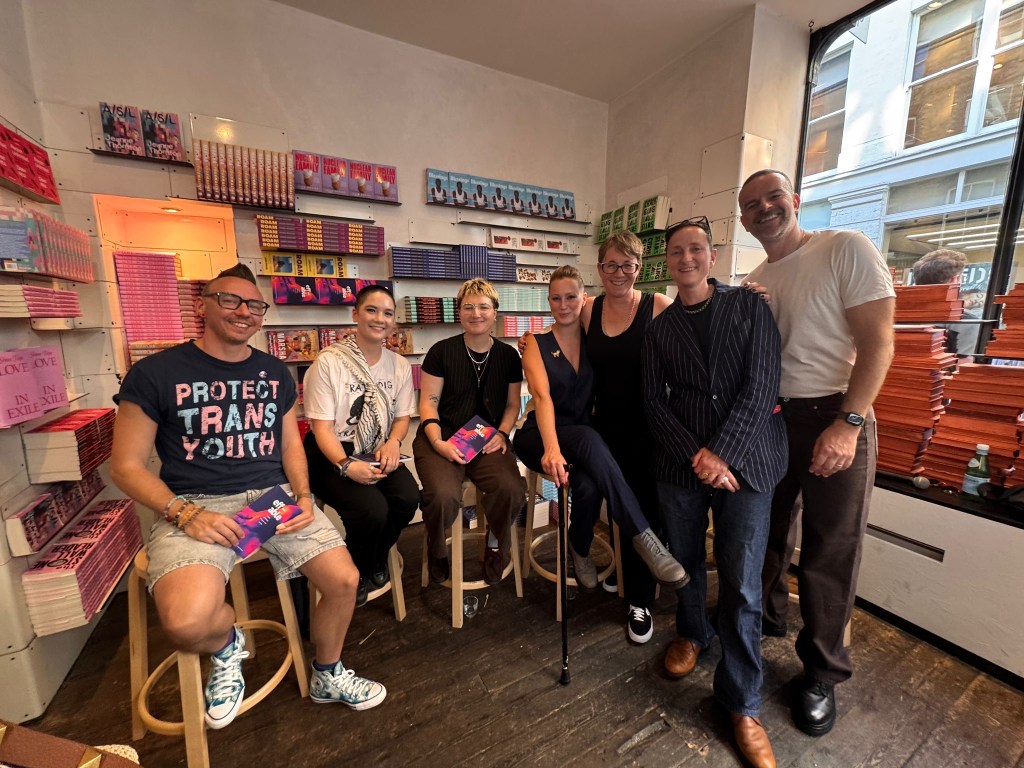
I would give it to people who like myself might be in a place, where they are newly disabled, or are dealing with a change in the way that disability is affecting them because I think when you start to experience disability, your body can become very medicalized, and you can forget who you can forget that.
This book is really something that everyone should read. I spend a lot of time in queer spaces and queer kind of spicy spaces. And I think that there has been a real effort to include disabled people in lots of those spaces, but to more and less success and sometimes the nuances of what it is to be in those spaces and to navigate the world as a disabled sexual person, it can be really difficult to articulate.